Need concrete patios in Canonsburg?
Share your driveway or patio plan and request an estimate. A local provider from our network will follow up. There is no obligation.
No obligation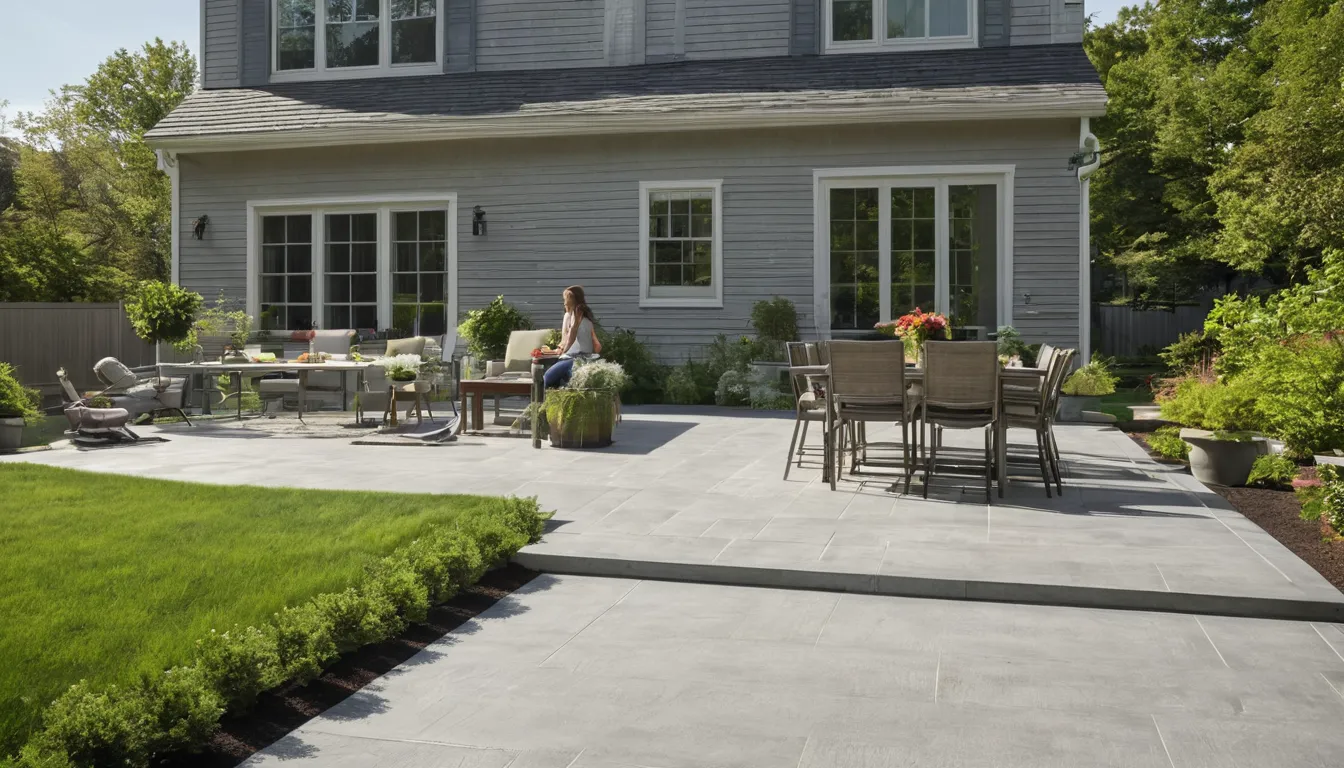
Request your patio estimate
A lot of people think a patio is just a flat slab poured on a sunny afternoon. In practice, the slab is the last part of the job. The ground, the base, the slope and the weather all come first. Speaksupgrade Concrete helps you sort that out before you talk to anyone.
Speaksupgrade Concrete is a referral service. We do not pour concrete. We connect homeowners in the Canonsburg area with independent local providers who handle concrete flatwork, from simple broom-finish slabs to stamped concrete patios. You bring photos, rough measurements and a few notes. The provider brings the know-how. Request an estimate with no obligation and compare your options at your own pace.
A lot of people think a patio project has to be decided fast. In practice, the calm planner usually gets the better result. Concrete is permanent, so a quiet first hour pays off for years.
Start with your phone. Take wide shots of the spot from the house, the yard and the street side. Add close-ups of the ground, nearby steps, downspouts and the foundation wall. Date-stamped photos help every provider see what you see.
Stand where the patio will go. Note where water pools after rain. Note where snow piles up and where the sun lands in the afternoon. A page of plain notes beats a long phone call later.
Some believe concrete is cold, plain and boring. It does not have to be. It can be colored, stamped, brushed or sealed to suit your home. It also holds up well to furniture, grills and heavy planters.
Stamped concrete patios can mimic stone, brick or wood planks. Many homeowners like the look without the upkeep of loose pavers. Ask providers to show sample patterns and explain how the color is added.
Most people picture only the pour. The real list is longer. A typical job covers layout, digging, a compacted gravel base, forms, reinforcement, the pour, finishing, joints, curing and sealing.
A good slab sits on a firm, level base. Skipping that step is how cracks and sinking start. Ask each provider how deep they plan to dig and what base material they use.
There is a myth that bigger is always better. A patio should fit how you live. Lay out a hose or string on the lawn. Set out your table and chairs, then walk around them.
Plan about three feet of clear space behind each chair. Add room for a grill and a path to the door. Measure length and width, then share both numbers with every provider.
Smooth concrete can get slick when wet. A broom finish adds grip. Exposed aggregate shows small stones in the surface. Colored and stamped finishes cost more but add style.
Cold snowy winters and repeated frost cycles are hard on concrete. Ask about air-entrained mix, proper joints and a sealer made for your climate. Be careful with de-icing salts on a young slab.
Many homeowners assume water will just run off. It often does not. A patio should slope gently away from the house, usually about one-eighth to one-quarter inch per foot.
Older housing stock with stone or block foundations and full basements can be sensitive to water near the wall. If you already see damp walls or cracks, ask about foundation repair experts before you build beside that wall.
The quote that takes the least effort is not always the clearest one. Ask each provider for a written estimate that lists the size, thickness, base, finish, sealing and cleanup. Compare line by line.
Keep every estimate, photo and note in one folder. Save the final scope in writing. If storm damage ever affects the area, some policies may cover sudden damage; check your policy. Providers can often help document damage for a claim.
Concrete driveway repair is a different kind of project with its own needs. If you need that, ask the provider about it separately, so each job gets its own scope and price.
New concrete needs time to cure. Keep heavy loads off until the provider says it is ready. Seal it as advised, sweep often and rinse spills. Re-seal on the schedule your provider suggests.
Request a callback to check provider availability in your area, or send the request form and get started on your own schedule.
Providers mark the shape, dig out the area and set the depth so water can drain properly.
A firm, level base under the slab helps limit cracking, settling and frost movement.
Forms shape the edges, while mesh or rebar helps hold the slab together.
Concrete is poured, smoothed, textured or stamped, cut with joints, cured and sealed.
Prices vary by size, site access, finish and local labor. These are typical U.S. ranges only. Always get a written quote that spells out exactly what is included before you decide.
| Item | Typical range | Notes |
|---|---|---|
| Basic broom-finish slab | $6 – $12 per sq ft | Simple, gripping surface; most common choice |
| Stamped or colored concrete | $12 – $22 per sq ft | Pattern and color add labor and materials |
| Exposed aggregate finish | $8 – $18 per sq ft | Shows small stones; good grip underfoot |
| Excavation and gravel base | $1 – $4 per sq ft | Depends on soil, access and base depth |
| Removing an old patio | $2 – $6 per sq ft | Higher if the slab is thick or reinforced |
| Sealer | $1 – $3 per sq ft | Often reapplied every few years |
Walk the space, take wide and close photos, and note where water or snow collects.
Write down length and width, then sketch the shape and where furniture will sit.
Send your details and photos through the form so providers can review the project.
Check size, base, finish, sealing and cleanup line by line, then pick a provider.
Photos, measurements and notes help providers give clearer estimates without extra back-and-forth.
Independent providers in our network know regional soil, frost and weather conditions.
Simple steps and typical cost ranges help you understand the job before you commit to anything.
Request an estimate with no obligation, compare at your own pace and choose what fits.
Share your driveway or patio plan and request an estimate. A local provider from our network will follow up. There is no obligation.
No obligationMost residential patios are about four inches thick, with a compacted gravel base underneath. Heavier loads like hot tubs may need more thickness or extra reinforcement, so ask each provider to put it in writing.
Light foot traffic is often fine after a day or two, but furniture and heavy items usually wait longer. Full curing takes weeks. Follow your provider's advice for your weather.
It depends on your town, the patio size and how close it sits to the property line. Ask the provider or your local building office before work begins, and keep the answer in your records.
Share your driveway or patio plan and request an estimate. A local provider from our network will follow up. There is no obligation.
No obligation